
Mapping a New Frontier: How Australian Spatial Analytics is Redefining the Autistic Career Path
 In Australia, we often refer to ourselves as the ‘Lucky Country.’ We are a nation defined by the ‘fair go,’ with egalitarianism ingrained in our psyche. However, that ‘fair go’ wasn’t extended to our neurodivergent population, particularly autistic Australians.
As the CEO of Australian Spatial Analytics (ASA), I have seen firsthand that the greatest barrier facing young autistic adults is not a lack of ability, but a lack of opportunity. At ASA, we are working to change that narrative by proving that autism is a competitive advantage to be harnessed in the workplace.
The Australian context: from awareness to inclusion
Awareness of autism in Australia has grown significantly over the last decade. With roughly 1 in 70 Australians being autistic (~400,000 people), most people have a connection to neurodiversity in some shape or form.
But a sobering statistic remains: the unemployment rate for autistic adults in Australia is 34%—three times the rate of people with disabilities and eight times the national rate. Many young autistic Australians finishing school face what we call the ‘employment cliff.’ They have the skills, the passion, and the intellect, but traditional recruitment processes shut them out from employment.
The ASA employment model
ASA was born out of a simple, powerful realisation: the skills many autistic people have—pattern recognition, precision, sustained focus, and an affinity for ‘big data’—are exactly what the growing digital economy needs.
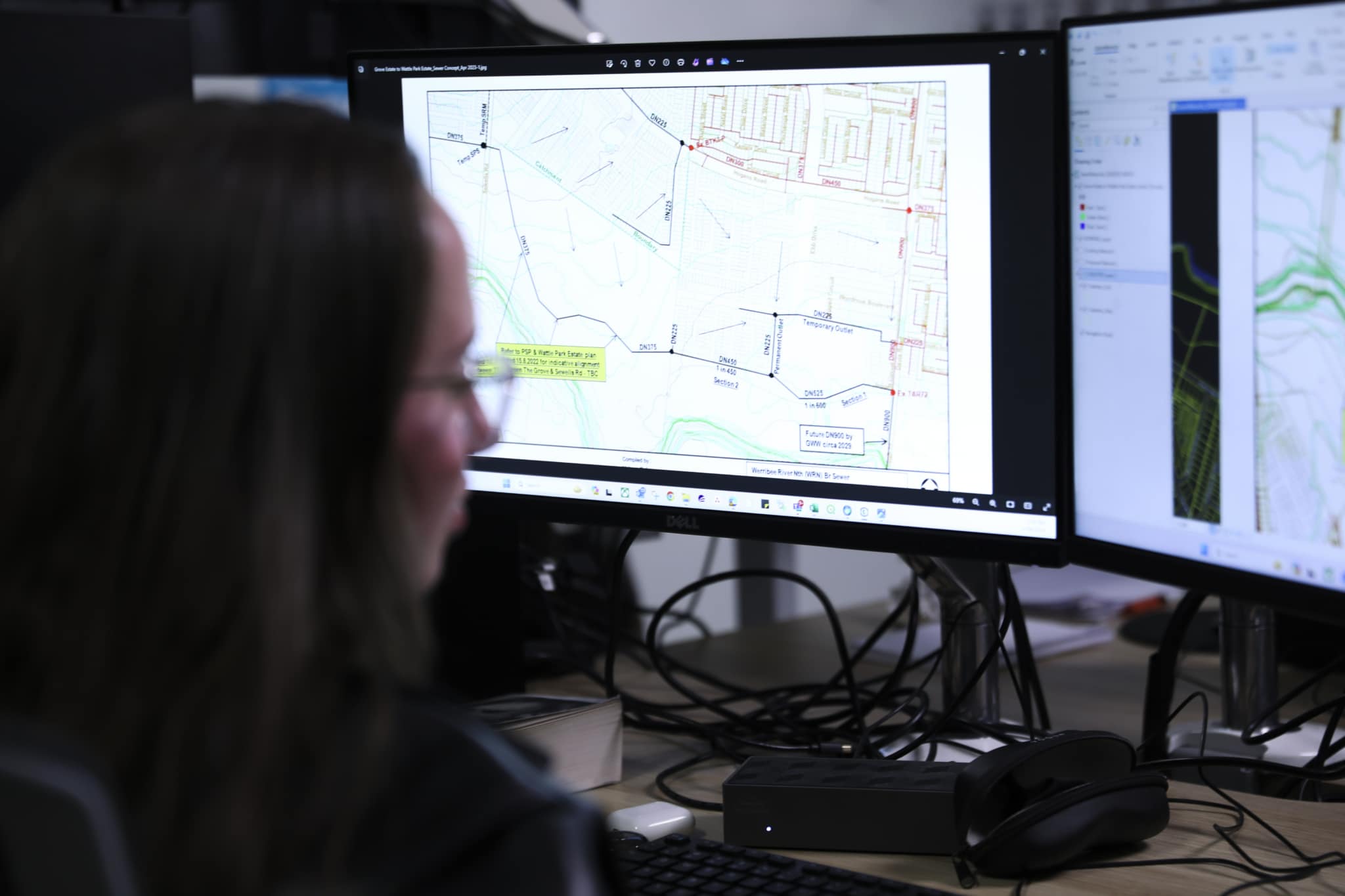
We are a not-for-profit social enterprise that employs neurodivergent people – 80% of our workforce – to perform high-value data services for real-world projects for all levels of government and multiple industries, specifically in Geographic Information Systems (GIS) and digital engineering. These technologies are essential for delivering Australia’s critical infrastructure and environmental management objectives.
When we started in 2020, we didn’t want to create a ’charity’ or ‘pity purchase’ environment. We wanted to create a world-class data consultancy. By redesigning the workplace to be sensory-friendly, ensuring clear communication, and removing social barriers, we have unlocked a level of productivity that rivals or exceeds others in our realm.
The power of focusing on strengths, not perceived ‘deficits’
The goals of Autism Around The Globe resonate deeply with our mission. One of those goals is to increase understanding of how cultural variations affect the experience of autism. In Australia, our culture is moving away from the ‘medical model’—which views autism as a ‘deficit’ to be ‘fixed’—and toward a ‘social inclusion model’, thanks to the 2025 release of the National Autism Strategy.
In this model, we recognise that the environment is often the ‘disability,’ not the person. If a bright, capable autistic data analyst cannot work because the office lights are too bright, or it’s too noisy, or the instructions are too vague, that is a failure of management. No one can perform at their best in the wrong environment. By sharing our model with the global community, we hope to show that this shift in perspective can happen anywhere. Whether in Brisbane, Baltimore, or Beijing, the strengths of the autistic mind are universal.
A story of social impact: more than just a job
At the heart of ASA are the personal stories of our team members. Take Ben, for example, one of our former data analysts who was out of work for six years and applied for hundreds of jobs with nothing to show for it. He ended up being one of our star performers and now works with a leading geospatial agency.
By giving countless people like Ben a chance, he now has financial independence, increased confidence, and—most importantly—feels he is a contributor to society. ASA is a case study on how the power of meaningful work can dramatically improve both social and economic outcomes. For example, if that 34% unemployment rate were reduced by just one-third, Australia could add over $AUD 43 billion to its economy every single year.
We simply cannot afford to ignore the autistic community.
Encouraging global collaboration
One of the aims of Autism Around The Globe is to encourage knowledge transfer worldwide. We know our model is a blueprint that can be adapted to any setting. We are eager to collaborate with international partners, philanthropists, researchers, and families to share how social enterprises can bridge the gap between education and employment.
We don’t just want to provide jobs for autistic people in Australia; we want to inspire a global movement in which data-driven industries everywhere recognise autistic talent as critical for their workforces.
Conclusion: a call to the global community
Raising global public awareness of autism means moving beyond just ‘knowing’ that autism exists. It means recognising the immense economic and social value that neurodivergent people bring to our communities.
To anyone reading this article, please take heart that the landscape is changing. In Australia, we are proving that when you change the environment, you change the outcome. We invite you to join us in this mission by helping autistic people thrive by advocating for their right to meaningful careers.
The world is full of data and brilliant autistic minds who are ready to deliver amazing outcomes from it. It’s time we gave those minds the space to shine.
For more information on our work, visit Australian Spatial Analytics. Together, we can map a more inclusive future for the autistic community worldwide.
Geoffrey Smith
CEO of Australian Spatial Analytics
2026
The views expressed in this paper are those of the author(s) and do not necessarily represent the views of the NLM Family Foundation.